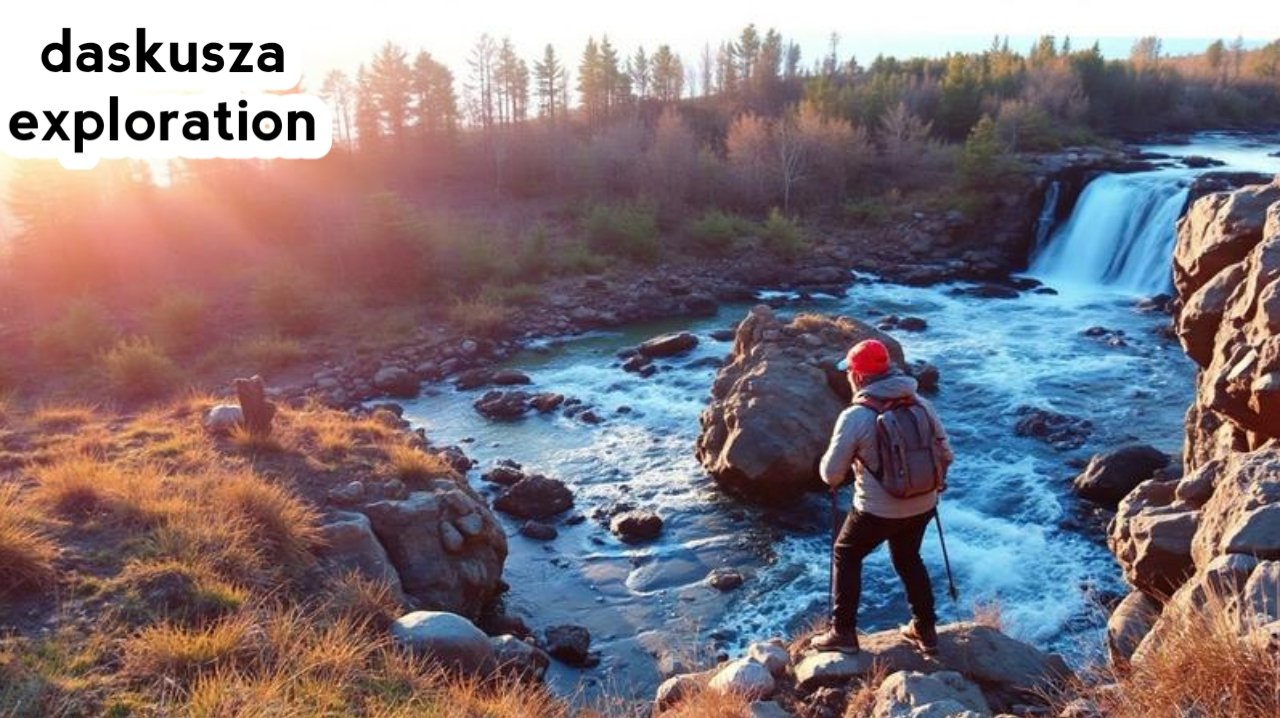
Have you ever wondered what lies beyond the boundaries of known maps or the contours of everyday life? The concept of Daskusza Exploration captures that curiosity — a journey into uncharted territories, whether physical, cultural, or even spiritual. This isn’t just about finding a lost land; it’s about probing the limits of what we know and challenging how we define history, culture, and self-discovery.
In this article, we will dive deep into the mystery of Daskusza Exploration: its possible origins, geographic theories, cultural significance, modern-day expeditions, and the metaphorical dimensions that make it such a compelling idea today.
Origins and Etymology
A Name Shrouded in Mystery
The exact origin of the term “Daskusza” remains uncertain. Linguistic roots suggest links to words meaning “whispering earth” or “hidden land.” Others believe “Daskusza” evolved organically within creative and cultural communities — emerging as a conceptual space rather than a strictly historical place.
This ambiguity gives the concept a powerful allure: Daskusza exists in multiple dimensions — physical, symbolic, and metaphorical. Visit Betweencarpools.net for more details.
Mythic and Folkloric Roots
Legends talk of lost tribes, sacred groves, and natural phenomena that defy explanation. Travelers’ journals from past centuries reportedly recorded stories of mysterious valleys, unusual rock formations, and ruins hinting at civilizations long forgotten. Over time, these tales mixed mythology with cultural memory and speculative geography, making Daskusza an enduring symbol of mystery.
Geographic Theories: Is There a Real Place?
One of the most debated aspects of Daskusza Exploration is whether it corresponds to a real, physical location. A few prevailing theories exist:
| Hypothesized Region | Supporting Arguments | Challenges |
|---|---|---|
| Eastern Europe / Carpathian Basin | Rolling hills, dense forests, and local folk traditions hint at a hidden region. | Modern mapping shows no clear “lost valley”; many ancient sites remain undocumented. |
| Central Asia / Pamir or Hindu Kush | Remote mountain passes, geological formations match mythical descriptions. | Political and logistical issues make exploration difficult; satellite data is inconclusive. |
| Symbolic or Multi-Region Landscape | Some argue Daskusza is not a single point but a conceptual tapestry — a symbolic geography of unexplored ideas. | This interpretation moves from “finding land” to “exploring ideas,” making empirical validation difficult. |
These theories show that Daskusza Exploration doesn’t have a universally agreed-upon “home” — part of its beauty lies in its ambiguity.
Cultural and Anthropological Significance
The Heart of Hidden Peoples
If Daskusza were a real place, it could have hosted a convergence of ancient cultures — Slavic, Turkic, Mongolic, and others. Legends speak of nomadic tribes preserving unique traditions, healing rituals, and celestial knowledge. Some anthropologists suggest the region might have been a crossroads for early migration and cultural exchange.
Folklore and Symbolism
Stories tied to Daskusza are full of evocative imagery: the Vanishing Lake, appearing and disappearing with the seasons; the Singing Tree, its branches humming in the wind; and communities possessing star-related wisdom passed down through generations. These myths are often metaphors for life’s mysteries, natural cycles, and human longing for connection.
Oral traditions preserve these stories, with elders passing down songs, rituals, and tales — anchoring Daskusza in culture and elevating its status as a spiritual or symbolic place.
Natural Wonders and Ecology
Biodiversity and Unique Ecosystems
Accounts describe Daskusza as having lush forests, microclimates, and rare species. Dense groves, wildflower meadows, and wildlife such as golden eagles, lynx, and wolves are often mentioned. Whether literal or metaphorical, these descriptions portray Daskusza as both spiritually and ecologically significant.
Geological Features
Geologists and adventurers speculate that the region may lie along fault lines or within mineral-rich zones. Some suggest rare earth elements or fossil deposits beneath its surface, potentially shedding light on Earth’s history. Thermal springs and unusual rock formations add to the allure, making Daskusza a compelling subject for exploration.
Modern Tools for Exploration
Explorers today rely on advanced technologies to study remote or conceptual regions:
-
Satellite and LIDAR Scanning: Reveal hidden terrain beneath dense vegetation.
-
Drones with AI: Map difficult terrain and detect anomalies.
-
Portable Labs: Onsite soil, water, and air analysis for ecological study.
-
Virtual Reality (VR): Model landscapes and recreate mythical features like Singing Trees or Mirror Lakes.
These tools allow precise research, minimize environmental impact, and respect local communities.
Ethical Challenges and Responsibilities
Environmental Preservation
Interest in Daskusza could lead to over-tourism or habitat degradation. Fragile ecosystems and rare species require explorers to prioritize sustainability, limit trails, avoid damage, and follow leave-no-trace principles.
Cultural Sensitivity
Local or indigenous communities may be tied to Daskusza myths or geography. Exploration should involve them respectfully, ensuring practices aren’t exploited or misrepresented, and benefit-sharing occurs.
Governance and Permissions
Some hypothesized regions may be politically sensitive. Explorers need proper permissions and compliance with local authorities. Transparency and collaboration are essential for responsible research.
The Metaphorical Dimension: Exploring Within
Daskusza isn’t confined to physical maps — it’s also a metaphor for personal and intellectual exploration.
Intellectual Exploration
Daskusza symbolizes pushing knowledge boundaries. Scientists, philosophers, and creatives use it as a mental frontier — to explore new theories, challenge paradigms, and innovate.
Emotional and Spiritual Growth
Many view the journey to Daskusza as exploring the terrain of the self. Questioning beliefs, healing old wounds, and discovering hidden parts of identity mirror the metaphorical exploration of Daskusza.
Cultural Rediscovery
On a societal level, Daskusza represents reclaiming forgotten histories, reviving lost languages, and reconnecting with ancestral traditions overlooked by mainstream narratives.
Real-World Expeditions and Research
Citizen Archaeology & Collaborative Mapping
Online communities contribute to open-source mapping, oral history preservation, and digital archives. Enthusiasts report possible findings, such as glyphs or unusual ruins, though scholarly validation is ongoing.
Institutional Involvement
Universities and research groups are forming multidisciplinary teams for Daskusza studies. Geologists, anthropologists, ecologists, and ethicists combine expertise to study regions responsibly and engage with local communities.
Funding and Support
Crowdsourcing, digital platforms, and community support allow independent explorers to contribute meaningfully without relying solely on large institutions.
Risks, Controversies, and Criticism
Not everyone supports Daskusza Exploration. Common concerns include:
-
Myth vs. Reality: Daskusza may be purely fictional, a romantic construct of folklore.
-
Cultural Appropriation: Misrepresenting ancient myths for tourism risks trivialization.
-
Environmental Damage: Unregulated exploration may harm ecosystems.
-
Geopolitical Complexity: Speculated regions may be sensitive or restricted, risking tensions.
-
Scientific Validity: Lack of verifiable evidence challenges its credibility.
Why It Matters Now
A Symbol for Our Time
Daskusza reminds us that unknowns still exist in nature, history, and ourselves. In a mapped and digitized world, the allure of the unexplored inspires curiosity, creativity, and wonder.
Innovation Through Exploration
The mindset behind Daskusza encourages innovation by blending technology, creativity, and tradition, fostering sustainable research, cultural preservation, and educational storytelling.
Community and Learning
Exploration fosters global community. Citizen science, digital storytelling, and collaborative research connect people, revive curiosity, and promote respect for traditions and the environment.
Practical Advice: How to Engage
If inspired by Daskusza Exploration, follow these steps responsibly:
-
Start with Research: Study academic materials, folklore, and expedition reports.
-
Contribute Ethically: Join open-source mapping or citizen research projects.
-
Plan Responsible Trips: Hire local guides, get permissions, and follow ecological best practices.
-
Use Digital Tools: VR modeling, remote sensing, and GIS mapping can explore hypothetical regions.
-
Reflect Internally: Journal, meditate, or creatively explore what “hidden lands” mean in your life.
Conclusion
Daskusza Exploration isn’t just about chasing a lost land. It’s a layered concept — part myth, part science, part spiritual quest. Whether a remote valley or a metaphor for personal growth, its power lies in challenging us to look beyond the visible and comfortable.
It invites curiosity, responsibility, and self-discovery. Engage thoughtfully, explore passionately, and perhaps you’ll uncover a piece of Daskusza — or a deeper understanding of what it means to explore.